Would Not Bother to See This Damn World Again Tomorrow
© All Rights Reserved. Delight practice not distribute without written permission from Damn Interesting.
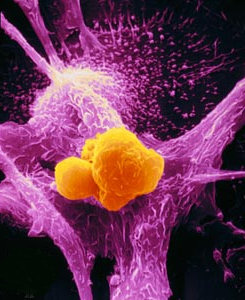
On October 1st 1890, William B. Coley, a young bone surgeon barely two years out of medical school, saw ane of his first patients in private exercise at the New York Memorial Hospital. Although he'd only finished his residency earlier the same year, he'd already gained a good reputation and many considered him a rising star of the New York surgical scene.
The seventeen year erstwhile patient had a painful, rapidly growing lump on the dorsum of her right mitt. She had pinched the unlucky appendage between two railway railroad vehicle seats on a transcontinental trip to Alaska some months before, and when the bruise failed to heal she assumed the injury had become infected. However the bruise turned into a bulge, the pain steadily worsened, and her baffled doctors were eventually compelled to phone call for Dr. Coley. As a surgical man, Coley would never have guessed that this innocuous referral would take his career in a totally new direction— into an unusual co-operative of medicine now known equally cancer immunotherapy.
At first Dr. Coley was also uncertain about the diagnosis. Just as the daughter's condition rapidly deteriorated– with the lump becoming larger, more painful, and associated with the loss of awareness in some of the surrounding skin– the atrocious truth became apparent. She had a sarcoma, a type of cancer that affects bone and connective tissue in the trunk. Unfortunately, 19th century medicine offered very few treatment options.
On November 8th, Coley amputated her arm at the elbow. Although the operation appeared to go well, the girl– named Elizabeth Dashiell– adult severe abdominal hurting 3 weeks later. Shortly thereafter she noticed more lumps in her breasts and armpits, signs that the cancer was metastasizing, or spreading. She rapidly lost strength and died on January 23rd 1891, a scant three and a half months after her initial consultation, with a traumatized Dr. Coley at her bedside.
Elizabeth's death hit the young surgeon difficult. While a more experienced physician might take shrugged away the credible failure and moved on, Coley was determined to do something. His ensuing efforts culminated in the development of a famous fluid that, for a time, appeared to promise the fulfillment of that long-held dream: a universal cure for cancer.
Coley began by poring through the hospital's records, looking for clues from previous sarcoma cases that might atomic number 82 to improve treatments in the time to come. He soon found what he was looking for: the case of a German man who came to the hospital with an egg-sized sarcoma in his left cheek some seven years before. At that place were several attempts to excise the tumour just none of them were successful— each fourth dimension the cancer came back, as aggressive as earlier. The final operation could only partially remove the huge mass, leaving an open wound that subsequently became infected. The unfortunate immigrant was deemed a terminal case.

Nonetheless 4 and a half months later, the man was discharged with no trace of illness. Coley personally tracked downward the former patient to verify that the miraculous cure had taken place. Indeed, the man was good for you and happily settled into his new life in the United States. The records showed that after the wound became infected with a commonplace bacterium, Streptococcus pyogenes, the patient went through several bouts of fever. With each assail of fever the tumour shrank until eventually it disappeared entirely, leaving only a large scar under the left ear. Coley surmised that the infection had stimulated the German'due south immune system– every bit evidenced by the repeated fevers– and that it was this allowed response that had acquired the eradication of the cancer.
The story so convinced Coley that he– perhaps cavalierly– contrived to contaminate his next ten suitable sarcoma cases with Streptococcus. His initial approach was to inject a solution of live bacteria deep into the tumour mass on a repeated basis over several months. The commencement patient to undergo this handling was a bedridden homo with inoperable sarcoma in the abdominal wall, bladder, and pelvis. Using this experimental method, the patient was cured spectacularly. He staged a total recovery, and survived another twenty-six years before dying from a center attack. But subsequent results were mixed; sometimes information technology was difficult to get the infection to have hold, and in ii cases the cancer responded well to treatment only the patients died from the Streptococcus infection.
Coley's discovery, equally it turns out, was actually a re-discovery. The idea of a link between acute infection and the resolution of tumours was not new, and the phenomenon of infection-related "spontaneous regression" of cancer has been documented throughout history. A 13th century Italian saint was reputed to have his tumour-afflicted leg miraculously healed shortly after the cancerous growth burst through the skin and became infected. Crude cancer immunotherapies working along similar lines to Coley's early on experiments were known in the 18th and 19th centuries, and may extend back to the time of the pharaohs. Ancient writings propose that the renowned Egyptian physician Imhotep may take used a like infect-and-incise method to treat tumours.
Just Coley took those starting time important steps in dragging this old remedy into the twentieth century. Later on the fatalities with the 'live' version of his therapy, he adult an improved fluid containing killed bacteria of two unlike strains, Streptococcus pyogenes and Serratia marcescens. This was based on the idea that the dead bacteria would notwithstanding accept the immune-stimulating capability of their living brethren (in the form of purported 'toxins'), but not share their inconvenient tendency to cause death.

His invention became variously known as 'Coley's Toxins', 'Coley'southward Vaccine', 'Mixed Bacterial Toxins' or 'Coley Fluid.' The treatment was met with considerable success, with 1 report in 1999 suggesting that it was at least equally as constructive in treating cancer as conventional modern therapies. With due care in dosing and management of the induced fever, it was besides remarkably safe.
Although Coley took the concept of immunotherapy much farther than his pharaonic forebears, he had no clear idea how his toxins really worked, and the tools did not nevertheless be for him to find out. But given the rapid scientific progress at the turn of the terminal century, he reasoned that a deeper understanding of his therapy would arrive shortly enough. Although the true extent of his "Toxin" success has been questioned past historians, the validity of his approach has never been seriously called into doubt. Indeed his results are regularly cited in the cancer research literature to this twenty-four hour period.
Over the following years Coley continued to refine his technique. He determined that the toxins should be administered to patients at progressively higher doses to counter the trunk'southward innate "immune tolerance" to the treatment. Other physicians in America and Europe likewise experimented with the method, and institute that the toxins appeared to work only every bit well in a number of different non-sarcoma cancer types such as carcinoma, lymphoma, and melanoma. They could besides exist given intravenously some distance from the site of the neoplasm, and still exist effective. Variations on the basic bacterial recipe and different dosing regimes were tried, depending on the individual patient and the particular cancer's type and proliferation. Through his career Coley himself treated over 1 hundred patients with his concoction, and countless more were treated by other doctors.
As the fame of his fluid grew, so did Dr Coley's stature: in 1915 he became head of the Os Service at the New York Memorial Infirmary (which later on became the Memorial Sloan-Kettering Cancer Center). By the time he died in 1936, Coley'due south Toxins were mentioned in a number of different surgical textbooks equally a standard anti-cancer therapy.
Conventional modern medicine, nevertheless, very rarely employs Coley's Toxins in the treatment of cancer, for reasons almost every bit complicated every bit the human being immune organisation itself. 1 concern is the far-from-complete agreement of the mechanism of activeness; more often than not, doctors are reluctant to administer treatments whose workings they don't fully comprehend. The stimulated human allowed organization is a whirling tempest of unlike physiological and biochemical responses, and fifty-fifty now there's much uncertainty well-nigh how Coley'south Toxins modified this complex mechanism to better set on its malignant target.

Ane theory stresses the importance of the fluid-induced fever in killing the cancer cells; some other considers the droppings-engulfing macrophage cells to be the master players, while others consider various different immune messenger molecules— or cytokines— to be important.
The eclipsing of Coley'due south Toxins as well had something to do with the concurrent evolution of radiation therapy and, a lilliputian later, chemotherapy. Soon after Wilhelm Roentgen discovered 10-rays in 1895, the possibility of using radioactive decay to care for cancer was investigated. The applied science was exciting, new, and developing fast along well-understood principles. Although the starting time results of radiotherapy weren't all that impressive, it had the reward of fractional doses, and one time the equipment was in identify information technology didn't crave the complicated, patient-specific preparation which was needed with Coley'southward Toxins. Likewise chemotherapy was based on known scientific principles, and could exist manufactured and used relatively easily.
Furthermore, both radiotherapy and chemotherapy have an immune-suppressing side-effect. Since both treatments kill the rapidly dividing cells of the allowed organisation along with the quickly dividing cancer cells, both tin can exist used together if care is taken. But allowed-stimulating Coley'south Toxins piece of work entirely differently, and their effect would be cancelled out if used at the same time equally high-dose immunosuppressant chemo- or radiotherapy. It became an either/or situation— and in the cease, the stylish new treatments won out over Coley's fiddly reworking of an ancient 'natural' remedy.
And then when the U.s.a. Food and Drug Assistants inverse the status of Coley'south Toxins to that of a 'new drug' in 1963– meaning that it could only exist used in clinical trials, and profoundly reducing its availability– information technology seemed that its time had already long passed. But cancer immunotherapy does have express applications today. Perhaps its most frequent mainstream use is in the handling of bladder cancer; solutions containing the tuberculosis vaccine are routinely instilled into cancer-affected bladders, and are effective in causing regression of tumour deposits. Information technology is theorized that the bladder's immune response deals with the cancer in a similar mode to the whole-body immune effect of Coley's Toxins.

Melanoma, a particularly nasty type of skin cancer that responds poorly to conventional radiotherapy and chemotherapy, is sometimes treated with an allowed-stimulating cytokine called interferon.
In some ways this century-old grade of handling is nonetheless a fringe expanse of medicine. But researchers have one time over again begun to probe the possibilities of immunotherapy. New antibiotic-based treatments similar Mabthera and Herceptin are making a real difference in the treatment of mutual cancers similar lymphoma and chest cancer. Although these therapies don't stimulate the trunk'south amnesty equally a whole, they are based on antibiotic molecules which are key components of the human being immune system. They show that our increasing noesis of the molecular nitty-gritty of the body's ain defence and repair network is starting to make a real difference in the battle confronting cancer. I tumour at a time, such advances in modern medicine are finally vindicating William Coley and his i-hundred-year-quondam cancer-killing batter.
Source: https://www.damninteresting.com/coleys-cancer-killing-concoction/?id=d1555%28%29%7C
0 Response to "Would Not Bother to See This Damn World Again Tomorrow"
Enviar um comentário